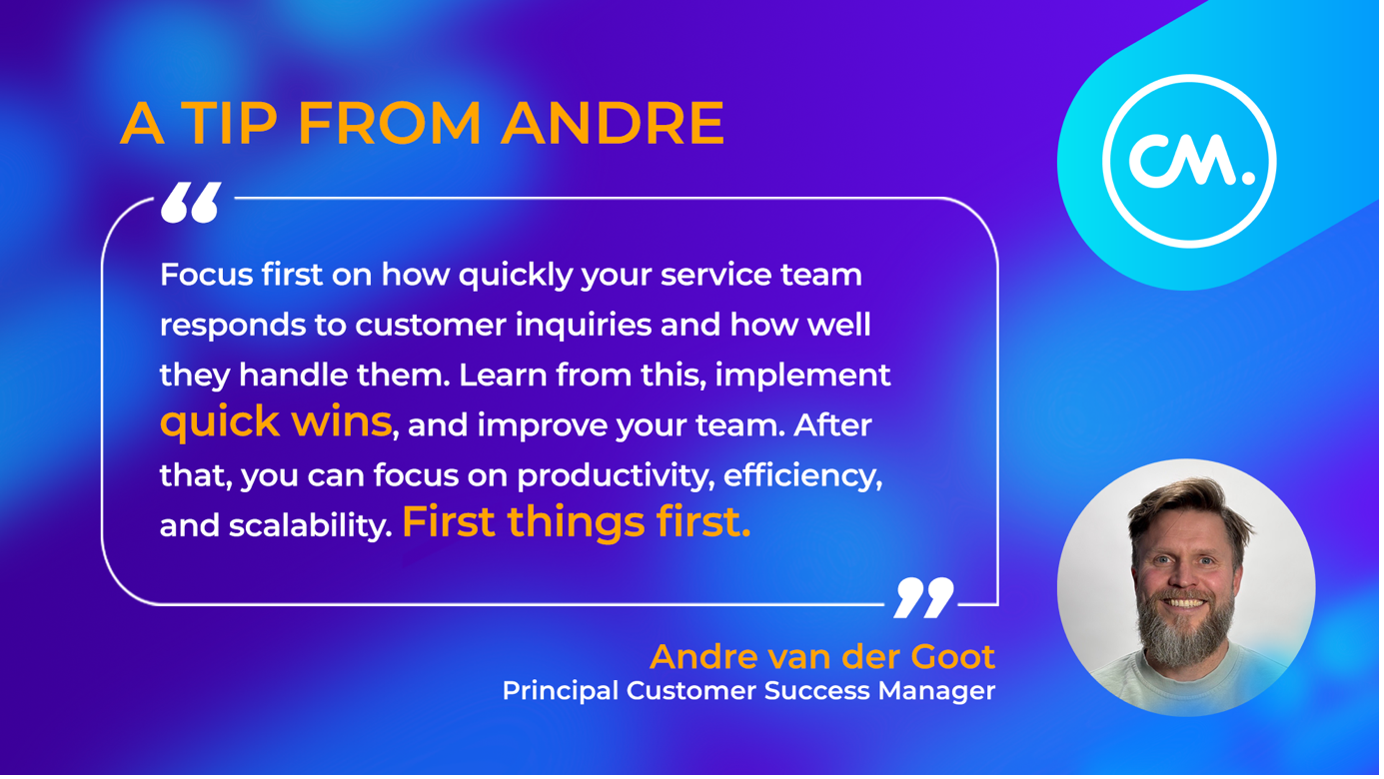
The first step in the model is organizing your internal processes. This is essential to lay a solid foundation for growth and to adapt smoothly to market changes.
When Start with the House in Order Phase?
-
Fragmentation of customer channels:
You notice that customer contact is spread across multiple tools and platforms, causing your team to work inefficiently and customers to experience inconsistency. This is a clear signal that you need to centralize all channels into one platform. -
Unclear response times:
Customers complain about long wait times or uncertainty about when they can expect a response. This indicates that you need to set and communicate SLAs to manage expectations and improve customer satisfaction. -
Lack of insight into customer inquiries:
You struggle to identify patterns in customer questions, making it difficult to use data to improve processes. This means you need to implement tagging and automation to gain better control over incoming inquiries and trends.
What Does House in Order Mean?
It means ensuring your internal processes are streamlined so your team can work efficiently and help customers quickly and effectively. This includes setting clear SLAs, using tagging, and automating routine tasks.
Practical Steps:
-
SLAs (Service Level Agreements):
Set clear timeframes for responding to customer inquiries. For example:-
Respond to emails within 8 hours.
-
Respond to WhatsApp messages within 2 hours.
-
Respond to live chat within 30 seconds.
Communicate these SLAs clearly on your website or contact page so customers know what to expect. This prevents frustration and increases customer satisfaction.
-
-
Tagging:
Use tags to efficiently categorize customer conversations. This helps you gain insights into common questions and trends. For example:-
Pre-sales: Product advice.
-
Payment: Invoice questions and payment methods.
-
Delivery: Questions about missing products or delivery times.
-
After-sales: Return policies and feedback.
Ensure your tagging structure is simple (follow the KISS principle: Keep It Simple, Stupid) so even new employees quickly understand how to apply tags and what they represent.
-
-
Triggers:
Automate routine tasks to reduce workload. For example:-
Set up triggers to send automatic responses to common questions.
-
Automatically archive spam or "out of office" messages.
-
Route specific questions to specialized employees (e.g., invoice-related questions to an invoicing expert).
-
Why Is This Important?
By organizing your internal processes, you create a solid foundation to build on. Your team works more efficiently, customers are helped faster, and you have more time to focus on strategic improvements.